June 7 , 2026.
Kamchatka , Sheveluch :
KVERT VOLCANIC ACTIVITY NOTICE (VAN)
Issued: June 6 , 20260606/0817Z
Volcano: Sheveluch (CAVW #300270)
Current aviation colour code: RED
Previous aviation colour code: orange
Source: KVERT
Notice Number: 2026-52
Volcano Location: N 56 deg 38 min E 161 deg 19 min
Area: Kamchatka, Russia
Summit Elevation: 3283 m (10768.24 ft), the dome elevation ~2500 m (8200 ft)
Volcanic Activity Summary:
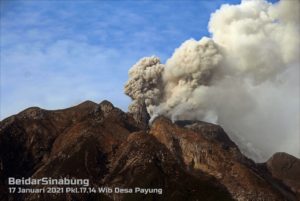
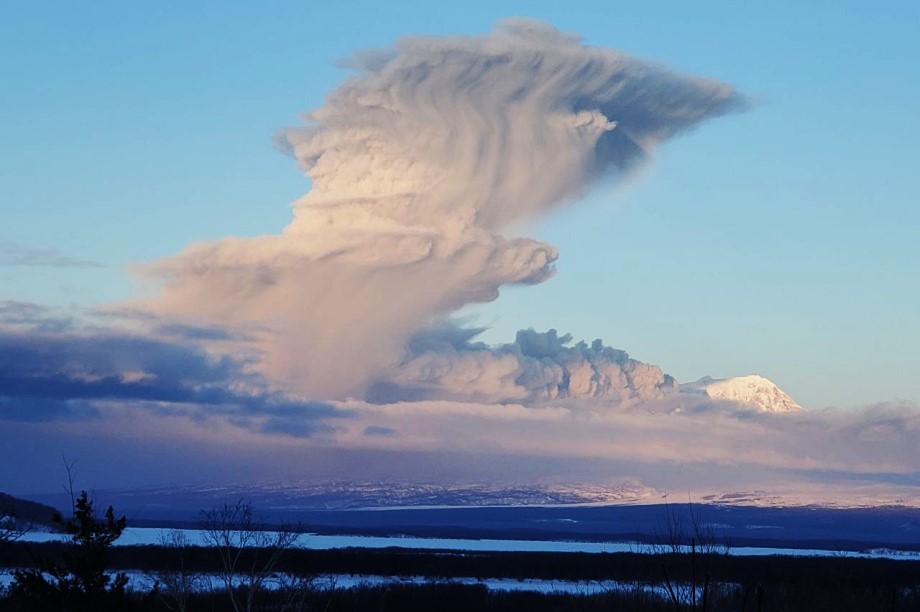
The explosive-extrusive eruption of the volcano continues, accompanied by powerful gas-steam activity; a new block of lava continues to grow in the northern part of the lava dome. Powerful explosive events with ash removal reaching up to 12 km a.s.l. is observing in this time.
The explosive-extrusive eruption of the volcano continues. Ash explosions up to 12 km (39,400 ft) a.s.l. could occur at any time. Ongoing activity could affect international and low-flying aircraft.
Volcanic cloud height:
12000 m (39360 ft) AMSL Time and method of ash plume/cloud height determination: 20260606/0800Z – Video data
Other volcanic cloud information:
Distance of ash plume/cloud of the volcano: 10 km (6 mi)
Direction of drift of ash plume/cloud of the volcano: E
Time and method of ash plume/cloud determination: 20260606/0815Z – Video data
Duration of explosion: ~ 10 min
Source : KVERT.
Photo : Yu. Demyanchuk.
Indonesia , Dukono :
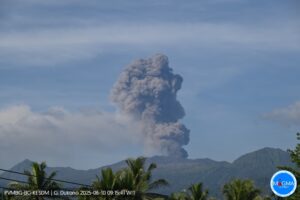
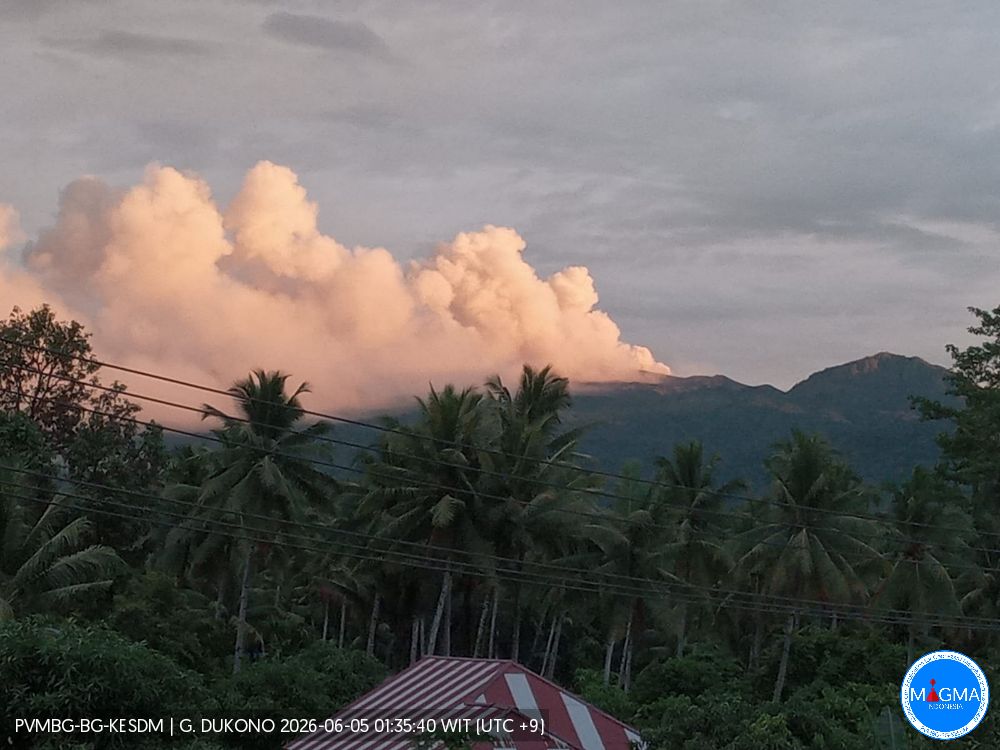
An eruption of Mount Dukono occurred on Sunday, June 7, 2026, at 07:04 WIT, with an observed ash column height of approximately 2000 m above the summit (approximately 3087 m above sea level). This ash column, white to gray in color, was highly intense and moving eastward. At the time of writing, the eruption was still ongoing.
Seismic Observations
39 eruption earthquakes with amplitudes between 6 and 34 mm and durations of 30.97 to 45.42 seconds.
35 low-frequency earthquakes with amplitudes between 3 and 4 mm and durations of 23.18 to 28.63 seconds.
Two distant tectonic earthquakes with amplitudes between 8 and 30 mm and durations of 57.52 to 60.58 seconds.
Continuous seismic tremor with amplitudes between 1 and 4 mm, predominantly 2 mm.
Recommendations
(1) Residents living near Mount Dukono and visitors/tourists are advised to refrain from any activity, climbing, or approaching the Malupang Warirang crater within a 4 km radius.
(2) Considering that eruptions with volcanic ash occur periodically and that the distribution of ash follows the direction and speed of the wind, so that the area where the ash lands is not constant, people living around Mount Dukono are advised to always carry masks/face coverings and mouth coverings to use when needed to avoid the threat that volcanic ash poses to the respiratory system.
Source et photo : PVMBG.
Colombia , Cumbal :
San Juan de Pasto, June 2, 2026, 5:20 PM
Regarding the monitoring of activity at the Cumbal Volcanic Complex (CVC), the Colombian Geological Service (SGC), an agency under the Ministry of Mines and Energy, reports the following:
During the week of May 26 to June 1, 2026, the main variations in monitored parameters compared to the previous week were as follows:
● An increase in the frequency of earthquakes and a decrease in their energy release were recorded. The most significant contribution to this activity is seismicity associated with rock fracturing.
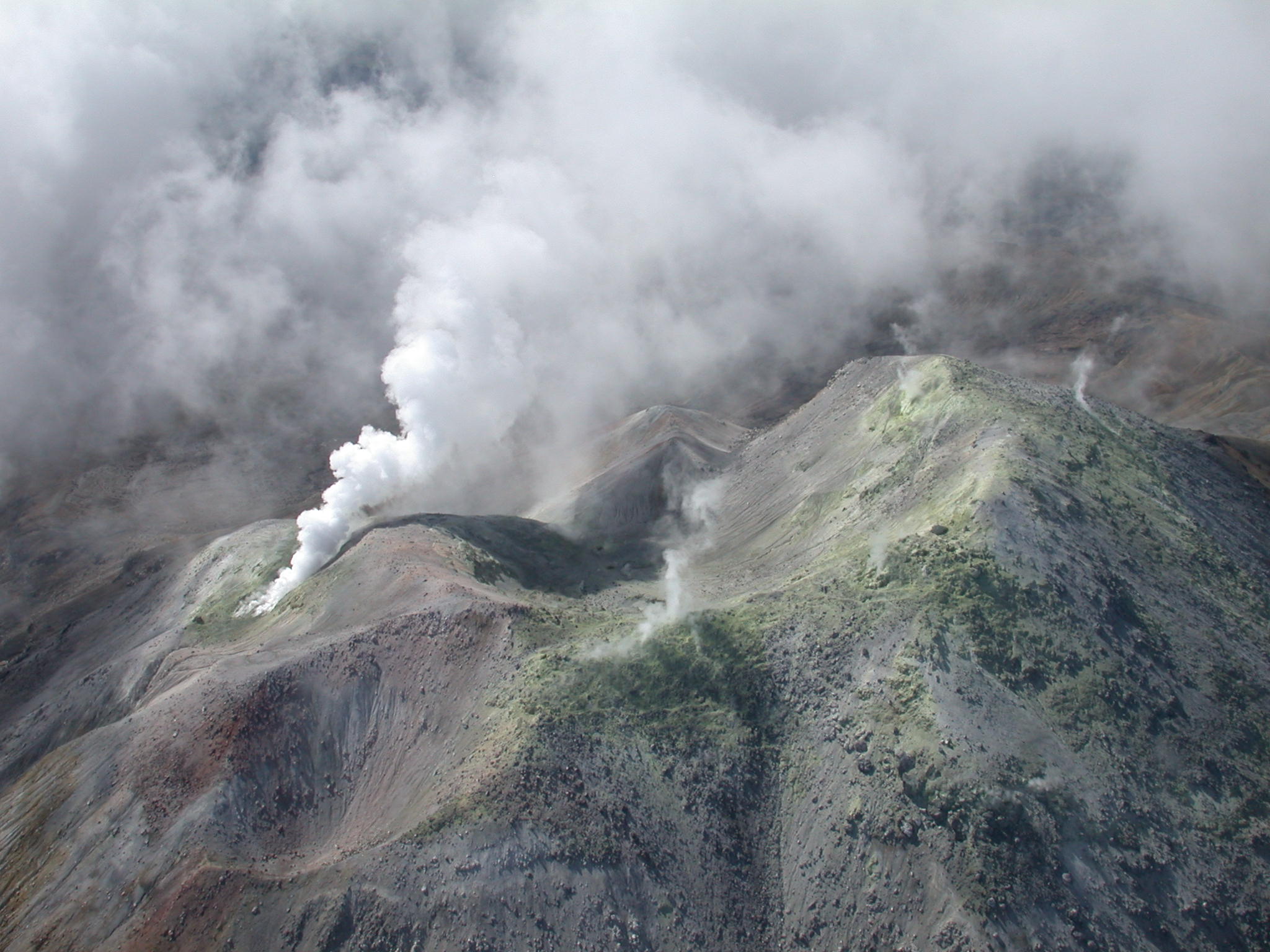
● Due to the low energy of the events, 18 earthquakes were located; their epicenters were oriented southeast/northwest on the volcanic edifice, less than one kilometer from the center of the CVC. Magnitudes were less than 0.7, with depths reaching up to 2 km, using the La Plazuela crater (4,700 m altitude) as a reference point.
● On May 30, gas emissions were recorded at the Los Rastrojos fumarole fields, located southwest of the CVC. The plume’s dispersion direction was variable due to wind.
● Other volcanic monitoring parameters remained stable.
In light of the above, the SGC recommends closely monitoring the evolving situation by consulting the weekly bulletins and other information published through its official channels, as well as the instructions of local and departmental authorities and the National Disaster Risk Management Unit (UNGRD).
Volcanic activity remains at the yellow alert level: active volcano exhibiting changes in the baseline behavior of monitored parameters and other manifestations.
Source et photo : SGC.
Peru , Sabancaya :
Local date and time: June 1, 2026, at 1:37 PM
Bulletin analysis period: May 25–31, 2026
Volcanic alert level
Orange alert level: The volcano’s eruptive activity has increased significantly. Increased seismic activity, frequent explosions, and emissions of ash and ballistic fragments have been observed.
Conclusions
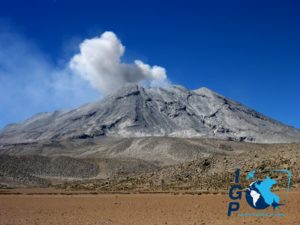
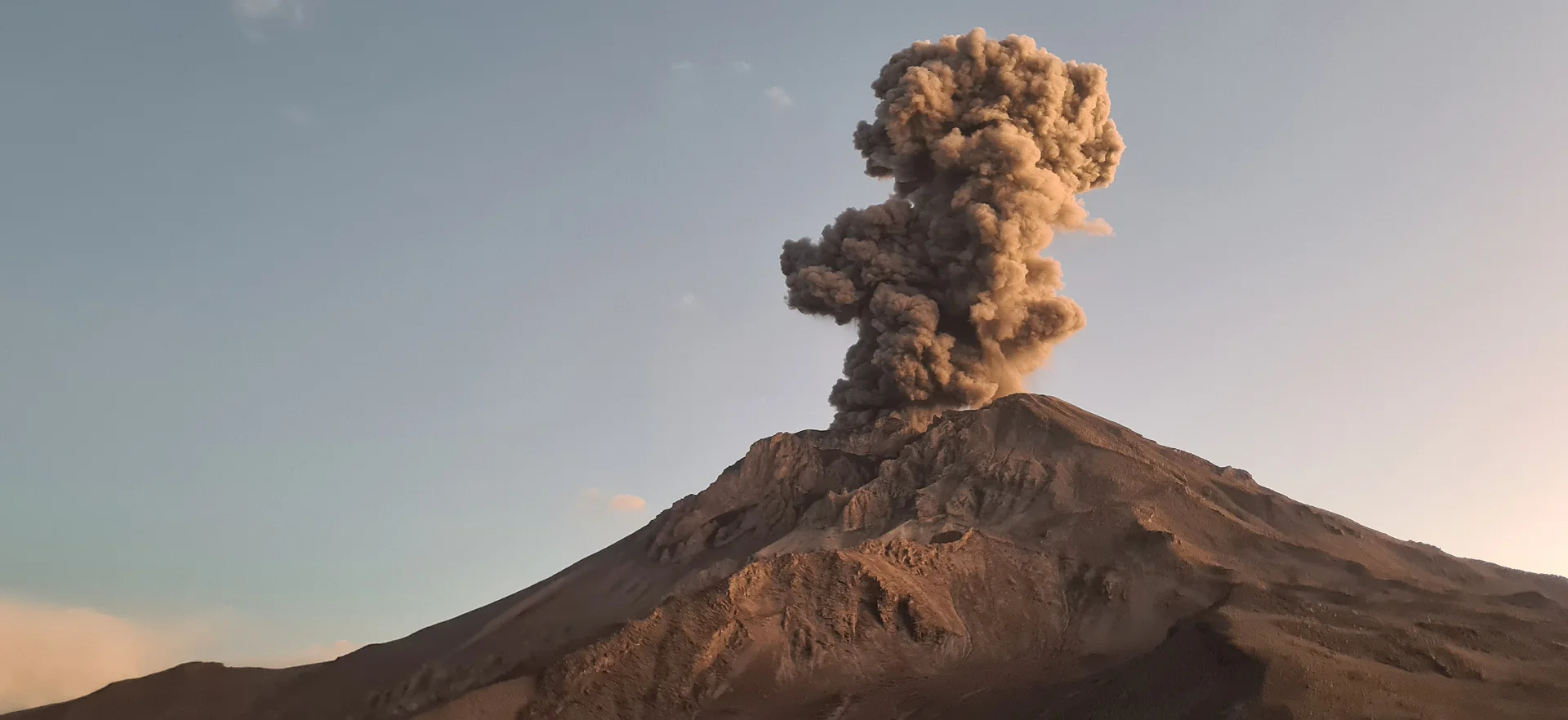
The IGP reports that the eruptive process of Sabancaya volcano continues. During this period, no volcanic explosions were detected; however, emissions of ash, water vapor, and gases were recorded up to 1,200 m above the volcano’s summit, in addition to seismic activity associated with the movement of magmatic fluids and internal fracturing. Therefore, the volcanic alert level remains orange.
Recommendations
Adopt the prevention and preparation measures in accordance with the current orange volcanic alert level.
Do not approach within 12 km of the crater. In case of ashfall, cover your nose and mouth with damp cloths or a mask. Keep the doors and windows of your home closed.
Stay informed about the volcanic activity of Sabancaya through the reports and bulletins published by the IGP (Geneva Institute of Public Health).
Outlook
The occurrence of future volcanic explosions generating eruptive columns more than 2 km high is considered likely, with a risk of impact on districts located in the Colca Valley and surrounding areas due to the dispersal of volcanic ash. Therefore, the volcanic alert level remains orange.
Source et photo : Cenvul .
La Martinique , Mount Pelée :
Weekly Report, Paris Institute of Earth Physics / Martinique Volcanological and Seismological Observatory
Saint-Pierre, June 5, 2026, 3:30 p.m. local time (GMT-4)
Between May 29, 2026, 4:00 p.m. UTC and June 5, 2026, 4:00 p.m. UTC, the Martinique Volcanological and Seismological Observatory (OVSM) recorded 138 volcanic earthquakes:
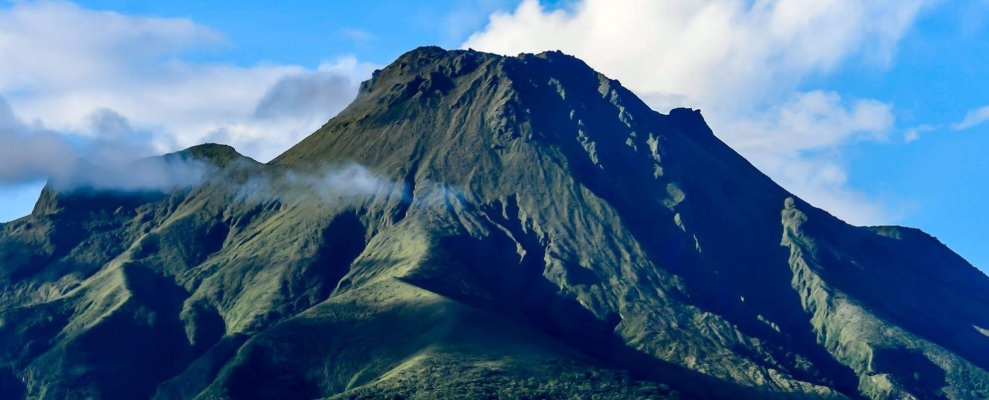
• 136 volcano-tectonic earthquakes. Among them, 15 had a magnitude (local magnitude Mlv or duration magnitude Md) greater than 0.5 and 1 had a magnitude greater than 1. The largest had a magnitude Mlv of 1.07. The others were of lower energy. These earthquakes originated from the well-known seismically active zones of Mount Pelée, located between 1.0 and 1.4 km below the summit of the volcano. Volcano-tectonic seismicity is associated with micro-fracturing in the volcanic edifice linked to the global reactivation of the volcano observed since
2019.
• One shallow, long-period earthquake. The seismic signals of these types of earthquakes are enriched in (or contain only) low frequencies and are associated with the circulation of fluids (gases, hydrothermal fluids) within the volcanic edifice.
• One deep, long-period earthquake located at a depth of 34.8 km southeast of Mount Pelée, with a magnitude of Mlv = 0.82. Deep, long-period earthquakes are characterized by signals that contain only low frequencies and are associated with the circulation of magmatic fluids deep within the Mount Pelée volcanic system.
No earthquakes were felt by the population.
The previous week, the OVSM (Swiss Volcanic Observatory) had recorded 51 earthquakes of volcanic origin. As of June 5, 2026, and over the past four weeks, the OVSM (Swiss Volcanic Observatory) has observed a total of 330 volcanic earthquakes, an average of 82 to 83 earthquakes per week.
Based on observations accumulated in recent years, and particularly in recent months, a change in the situation in the medium term (weeks to months) cannot be ruled out. The volcanic alert level, in accordance with the measures implemented by the authorities, is currently YELLOW: vigilance.
Source et photo : Direction de l’OVSM-IPGP.